Ronday
Spatial collaboration for remote teams: a virtual office that actually felt like being together.
- Role
- Head of Design, then Acting CEO; helped with the $7M seed raise
- Team
- First designer, then a design team of six, then a cross-functional org of 25
- Timeline
- 2021
- The only designer2021
- A team of six2022
- Acting CEO2023
- Problem
- Users doubted meetings were private, every download was a dropout, and UI changes took days.
- Solution
- A door sound for privacy, a three-layer browser rebuild, and a design system on the React layer.
- Results
28
Before · 4After · 28Active groups
4 hr
Before · 1 hrAfter · 4 hrDaily usage per person
3x
Adoption once the download went away
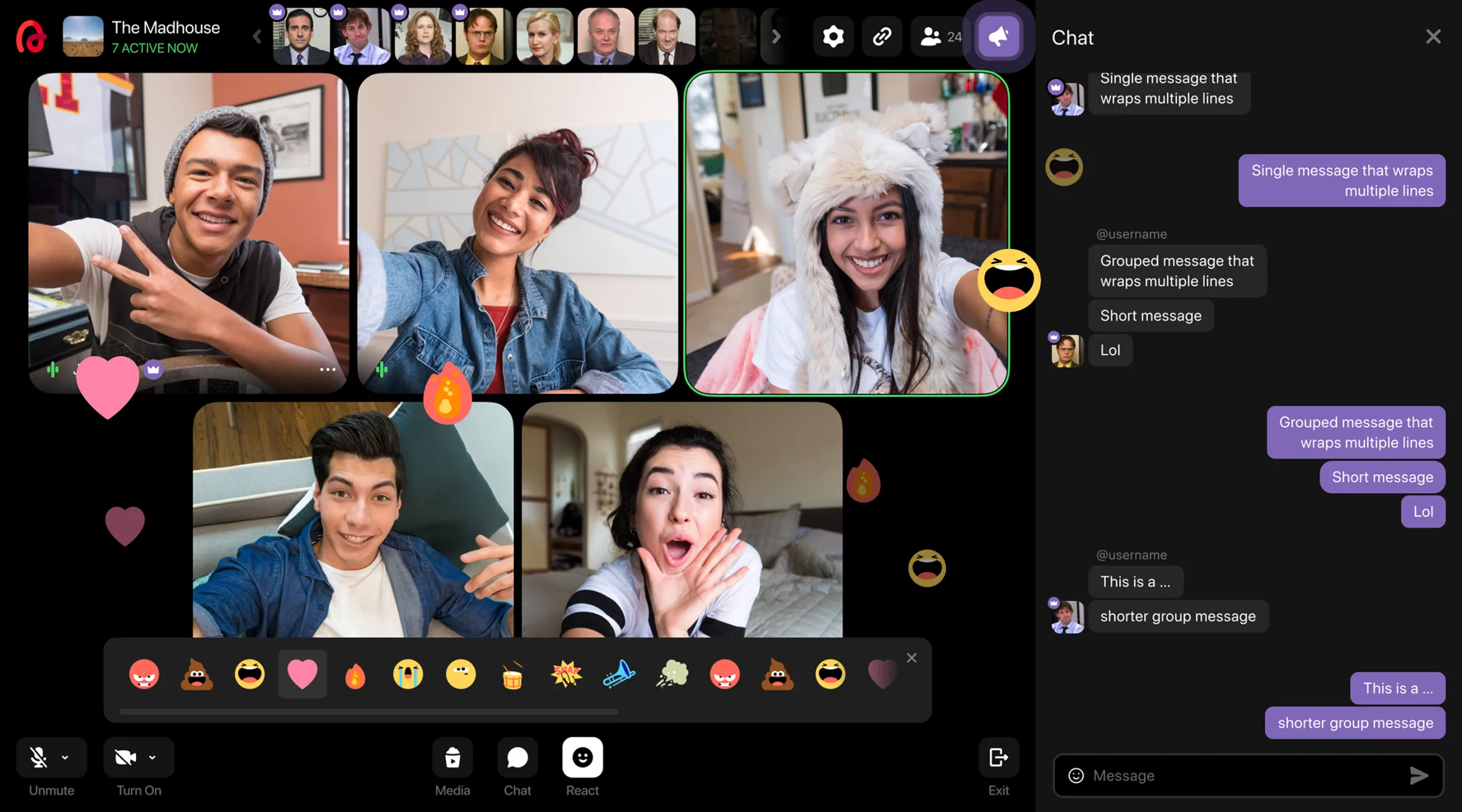
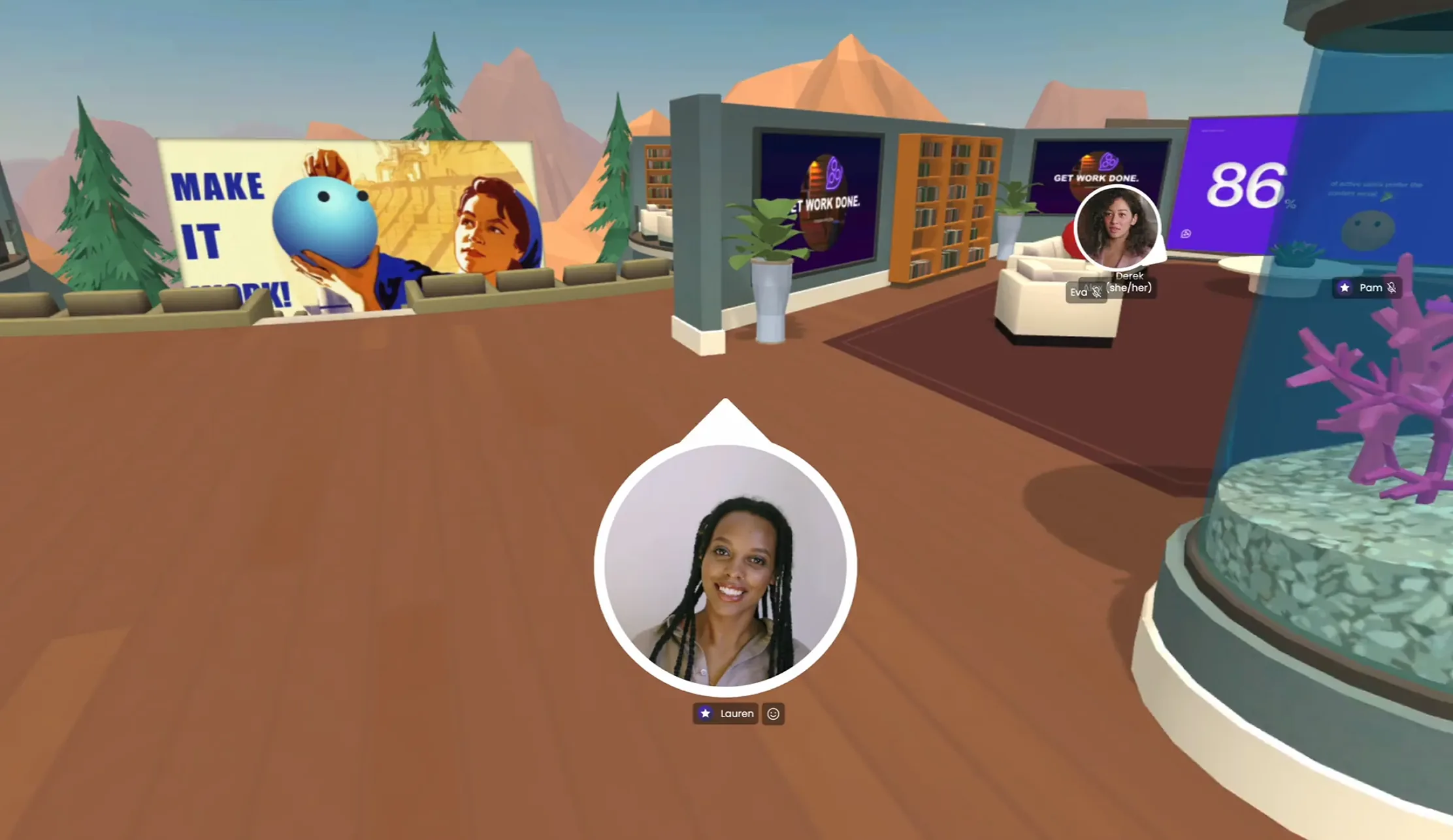
What Ronday looked like
Avatars in a 3D space, where conversations happen by proximity.
What made it feel alive
Roughly eighty percent work and twenty percent social.
The trust problem
Users kept asking if people outside the room could hear them. Labels and borders only helped those looking.
Final solution: audio and auto-pause
A door sound everyone hears, and a screenshare that pauses itself. Meeting-room time tripled.
The three-layer approach
Every download was a dropout, so we rebuilt for the browser: React, WebGL and Unity, layered. Nine months, not twelve-plus. I pushed for the React layer.
The Ronday Pattern Library
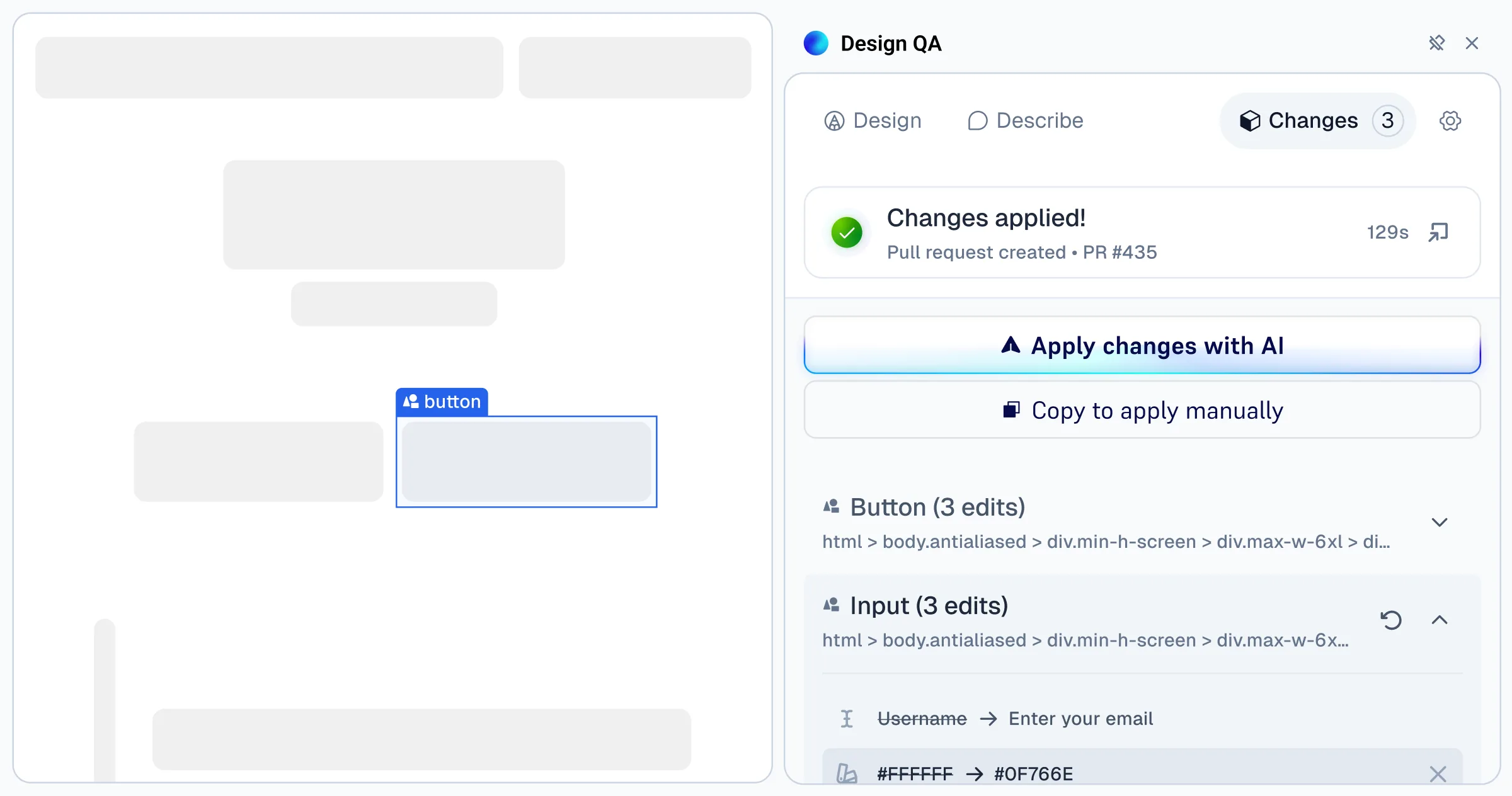
We standardized engineering's own components instead of adopting a library. UI bugs halved; UI changes shipped in hours.
Large spaces became connected areas
Past fifty users it broke. Doors split big spaces into areas of thirty, and we started going after enterprise.
The launch film
A spatial product is hard to pitch in stills.
Interactive prototype
An Orbatar in a Ronday space. Click around.

Password protected. Ask for access at [email protected]